
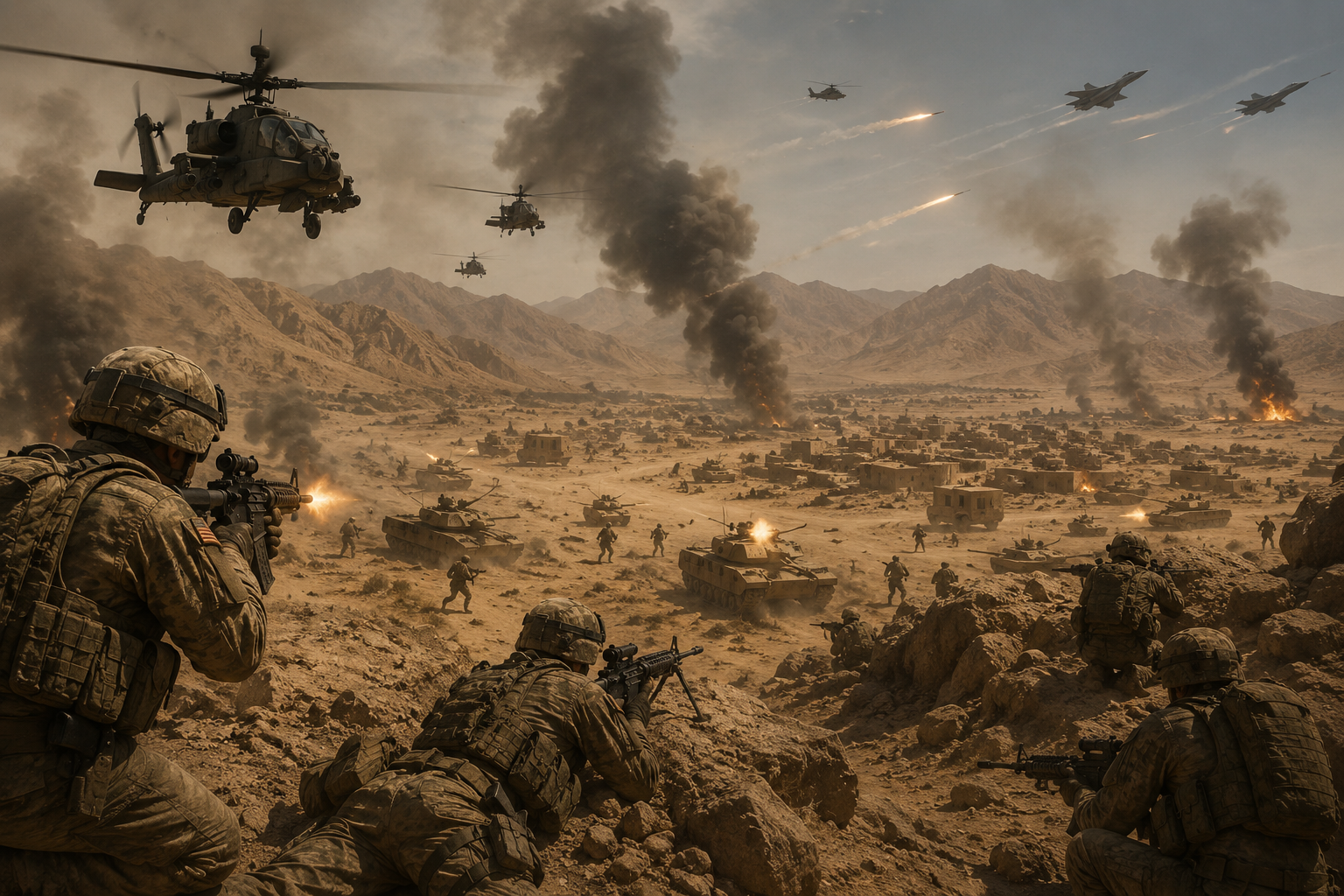
Power Politics
“If a state is not strong it will be a standing invitation for others to prey upon it.”
Machiavellian politics brings the ground reality that is centered on achieving power through deception. Moreover, politics is not only a practice of power to reach a governing position but also a policy of deception for survival. The politics of domination not only sets up a mechanism to dominate the less powerful, but also punishes the powerless to hold the status quo. In other words, Machiavellian politics dictates the political phenomenon of the world as the functions of discipline and punishment have been at the core of hegemony in every age.
Power dictates politics as it is a basis for every political structure; so lust for power is always at the center of every political phenomenon. In fact, power is the immediate aim of politics to control the mechanism of rule over others, as Morgenthau marks, “Politics is a struggle for power over men, and whatever its ultimate aim may be, power is its ultimate goal and the modes of acquiring, maintaining, and demonstrating it determine the technique of political action.”
Morgenthau’s argument echoes the political reality Thucydides, Machiavelli, and Thomas Hobbes have seen in world politics. In realist thought, humans are characterized as being self-centered with their own well-being. As a result, every attempt in politics seeks out conditions for power politics in competitive relations.
Every society has at its centre politics that regulate a system in and through power. Politics does not subsist without power that focuses on the protection of its own well-being. Furthermore, politics requires power to dispossess others of power that may challenge the existing hegemon. Perhaps this is why the God who did not want to share his power, the fire stolen by Prometheus, with human beings punished Prometheus. God is almighty, because human beings are deprived of power, so that no one dared to question the decision, which debased the welfare of human beings, of God. Thus, the hegemon needs power in order to control hegemony or to hegemonize others.
Hegemony is underpinned by an ideology that provides the imperialist powers with an episteme to justify their ambitions. The wars and conquests are always glorified to glorify the projects of imperialism, which is built upon the same model as the Roman Empire:
No European state could ever forget that its model, the Roman Empire, had been founded as much upon glory as upon pietas—honour, piety and arms, which are inseparable. In Europe, as in the US, the conquest of weak people or states was explained as ‘the white man’s burden,’ ‘the national mission,’ ‘the sacred trust,’ ‘the Christian duty.’ In the US it was the ‘manifest destiny,’ ‘national honour,’ ‘economic nationalism,’ and ‘racial superiority’ which were invoked to justify territorial acquisition.
The victory of the US and Europe was not only the matter of national honor, and national mission but also a noble mandate of the Christian duty, and the sacred trust. So “the white man’s burden” is, in a sense, also to spread religious values that civilizes and uplifts Non-Christians through Christianity. It means Christianity is superior to rest of all, and thus has right to territorial acquisition. This senses Nazism that believed their national honor in their “racial superiority,” and absolute power.
The West undertook the glorified mission of democracy—the white man’s burden—in and through the policy of liberalism. However, religion rationalizes its white supremacy to justify what they have argued and done. In this context, the mission of democracy that the US has initiated dehumanizes the rest of the world as they reveal their superior position as a civilizer.
As a result, the conceptual framework of institutional liberalism set up a foundation for international organizations that “. . . seek to characterize the major features of the Western order” (Jackson and Sorenson 123). Liberalism in the world politics changed the pessimistic and gloomy view of realism as the core concern of liberalism is based on the rule of law that summarizes cooperation between states through democratic practice. Democracy emerged as an anti-thesis to the world view of political realists as the liberals believe “. . . democratic peace is dynamic process rather than a fixed condition” (Jackson and Sorenson 114). So through the process of democratization the world politics can be maintained in an order.
Now democracy became the most convincing political thesis of the West to control the world, but nevertheless the West synthesized the liberal politics with the hegemonic world view of mercantilism. Although political liberalism has been theorized to keep world order, this theory conceptualizes the order in the behalf of the West. As the hegemonic stability theory developed from mercantilism, that prioritizes economics as a basis for political power, the world view of liberalism was dismantled by hegemonic stability theorists. Mercantilists believe that the economic rivalry, due to the opposing national interests, results in conflicts in the course of economic gain:
Mercantilists see the international economy as an arena of conflict between opposing national interests, rather than an area of cooperation and mutual gain. In brief, economic competition between states is a ‘zero-sum game’ where one state’s gain is another state’s loss. States have to be worried about relative economic gain, because the material wealth accumulated by one state can serve as a basis for military-political power which can be used against other state’s loss. (Jackson and Sorenson 181)
In this way, the world entered into Machiavellian world—power and deception—of politics as every nation has to win ‘zero sum game.’ Furthermore, in order to strengthen the underlying structure of military-political power the focal point of world politics remained in the competition of economic gain. So not only energy, but also control of the markets becomes the interest in the policy of the US in this rivalry as Fouskas writes:
. . . the US is not only interested in obtaining cheap oil or gas, nor in obtaining them from the Middle Eastern state alone. The US . . .also wants to control, as much as possible, their production and safe transportation to Western markets by eliminating possible West European, Eastern (e.g. Russia, China) or Middle Eastern competitors. (19)
In the present international politics, mercantilism has also been one of the discursive structures for US hegemonic stability that rests on the assumption that the US hegemony may uphold liberal international economy. Jackson and Sorenson brings the logic the supporters on hegemonic stability theory make, “A hegemon, a dominant military and economic power, is necessary for the creation and full development of a liberal world market economy, because in the absence of such a power, liberal rules cannot be enforced around the world” (196). Therefore, hegemonic stability theory that establishes the US and the West at the centre of world politics is a sequel to imperialist projects that aim to control the resources in order to maintain hegemonic position in world politics. In this context, Hafeez Malik finds no difference between imperialism and capitalism as both have aims for “economic and political exploitation of poor and weak nations” (64). So, he brings the references of Karl Marx and Lenin to justify the link between capitalism and imperialism, “Karl Marx identified modern imperialism as the product of capitalism, and Lenin added that when the monopoly stage of capitalism came into existence capitalism and imperialism became synonymous. . .” (63). In other words, capitalism has become synonymous to the international economy, controlled by the imperial role of the US. Michael Hardt and Antonio Negri, neo-Marxists, also think that the imperialism’s project of the US “. . . spreads its power linearly in closed space, and invade, destroy, and subsume subject countries within its sovereignty” (qtd. in Malik 64).
